
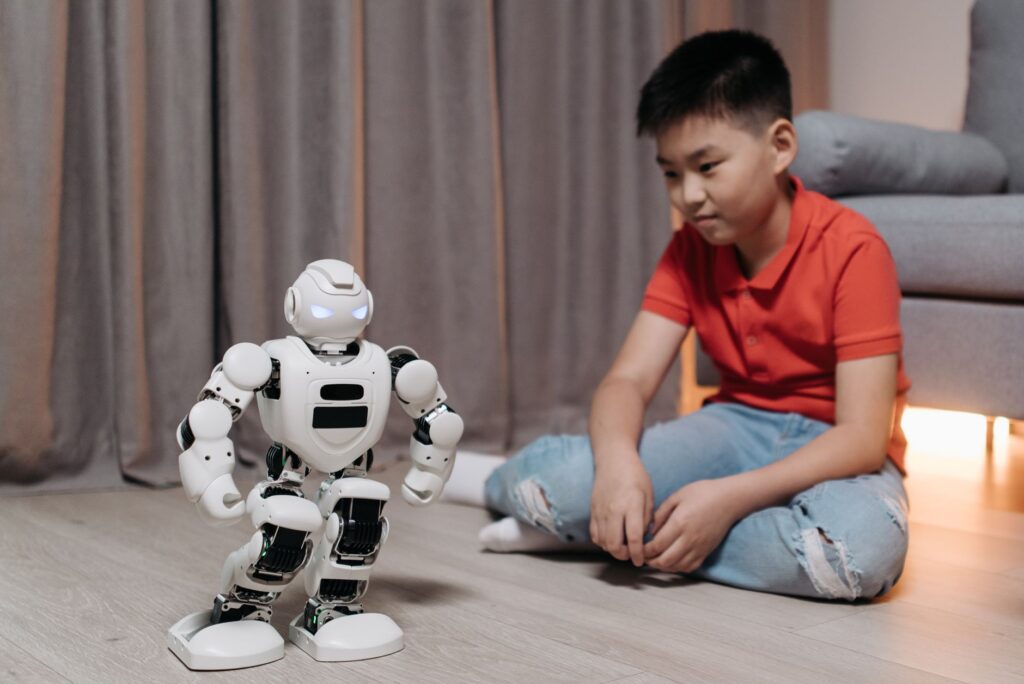
Picture this: it’s 2 AM, your essay’s due in a few hours, your math textbook looks like a foreign language, and you’re drowning in notes from a lecture you barely remember. Sound familiar? For lots of students, the academic journey can feel like a constant uphill battle against deadlines and tricky material. But what if there was a way to lighten the load, boost your understanding, and reclaim some much-needed sleep? Enter artificial intelligence for students. Once just a concept in sci-fi movies, AI is now a real, accessible resource changing how we learn, study, and tackle academic challenges. It’s not about replacing human intellect; it’s about giving it a boost. We’ll look at what AI in education actually means, the amazing benefits it offers, the best tools available right now, and how you can use its power to not just survive, but really thrive in your studies.
What Is AI for Students and Why Does It Matter?
When we talk about “AI for students,” we’re really talking about using artificial intelligence technologies to help out with different parts of the learning and academic process. This can be anything from smart algorithms that create personalized learning paths to simple chatbots that answer quick questions. Basically, AI in education uses technology to act a bit like human thinking – learning, solving problems, and making decisions to help students. These AI tools aren’t just experiments anymore; they’re quickly becoming standard in high schools, colleges, and universities all over. Knowing how to use these tools is no longer just an advantage; it’s starting to feel like a requirement. Students who get comfortable with AI are better prepared to handle tough academic demands and are building skills that will be super valuable in their future careers. It’s all about building a partnership with technology to make yourself better.
Benefits of AI for Students
There are so many good things about bringing AI into your academic life, and they can really make a difference. By using these smart tools, students can see a big jump in how much they get done and how well they learn.
- Saving Time on Research and Writing: Remember endlessly sifting through search results or staring at a blank page? Those days are fading. AI can quickly summarize articles, find relevant sources, and even help draft initial outlines or paragraphs for essays. This frees up your time for deeper thinking and making your work shine. It’s a huge help when you’re juggling multiple assignments and deadlines.
- Receiving Instant Feedback: Waiting days for a teacher’s feedback on a draft can be pretty frustrating. AI writing assistants and grammar checkers can give you immediate input on your writing style, grammar, punctuation, and even clarity. This lets you make improvements on the spot. Likewise, AI math solvers can point out errors in your equations instantly, helping you see exactly where you went wrong.
- Personalizing the Learning Experience: One of the biggest promises of AI in education is its ability to tailor learning to each student’s specific needs. AI can figure out your strong and weak points, adjusting the pace and content of your study materials. If you’re stuck on a concept, AI can offer extra explanations, practice problems, or different resources until you get it. This leads to more effective and efficient learning, moving away from a one-size-fits-all approach.
- Improving Organization and Time Management: AI tools can help you stay on top of your schedule, manage deadlines, and figure out what’s most important. Some AI assistants can even automatically transcribe lecture notes, organize your study materials, and suggest study schedules based on your upcoming exams and assignments. This level of organization can really cut down on that feeling of being completely overwhelmed.
- Reducing Academic Stress: By taking care of tedious tasks, offering quick help, and providing learning experiences that fit you, AI can really ease the pressure and stress that comes with academics. Knowing you have a reliable digital helper for research, writing, or understanding tough topics can boost your confidence and let you focus on actually learning instead of just trying to get by.
Best AI Tools for Students in 2024
The AI world is changing fast, with new and better tools popping up all the time. Here’s a look at some of the best AI tools for different student needs in 2024. Just remember, a lot of these offer free options, so they’re accessible to all students.
Writing & Grammar: AI Writing Assistants for Students
These tools are lifesavers for polishing your writing, making sure it’s clear, and fixing errors. They do more than just basic spell check, offering smart suggestions for style, tone, and structure.
- Grammarly: While not solely an AI writing assistant, Grammarly uses AI to give you advanced suggestions for grammar, spelling, punctuation, clarity, and style. Its browser extension works pretty much everywhere, making it a constant companion for any student who writes.
- QuillBot: This tool is fantastic for rephrasing sentences and paragraphs. It helps you reword content to avoid plagiarism and improve flow. It also has a grammar checker and a summarizer, making it a handy writing aid.
- Jasper AI (formerly Jarvis): A more advanced AI writing tool that can help generate content ideas, draft marketing copy, and even assist with essay writing. It does take a bit to learn and costs money, but its abilities are pretty impressive for longer writing projects.
- ProWritingAid: Similar to Grammarly but often considered more detailed for creative and academic writing, ProWritingAid gives you in-depth reports on style, grammar, readability, and more.
Research & Summarization: Condensing Information
Drowning in dense academic texts? These AI tools can help you grab the key info efficiently.
- Scholarcy: This AI-powered tool is made specifically for researchers and students. It can read articles, reports, and book chapters, then create a summary of the main findings, methods, and conclusions. It also pulls out references and highlights important parts.
- Genei: Genei uses AI to help you research and learn by organizing your research and providing AI-generated summaries. You can upload documents, web links, and PDFs, and Genei will help you find connections and pull out key information.
- Humata AI: This tool lets you upload PDFs and then ask questions about the content. It’s great for quickly finding answers within research papers or textbooks without having to read the whole thing.
Math & STEM: AI Homework Help for Students
For those tough equations and complex scientific problems, AI can lend a hand.
- Photomath: This mobile app lets you scan math problems with your phone’s camera and get step-by-step solutions. It’s a great tool for understanding how to solve problems rather than just getting the answer.
- Microsoft Math Solver: Similar to Photomath, this tool provides step-by-step solutions for a wide range of math problems, from basic arithmetic to calculus. It can also show you graphs and offer explanations.
- Symbolab: A powerful math solver that can handle complex equations, calculus, and more. It gives detailed steps and explanations, making it a fantastic resource for understanding mathematical concepts.
Flashcards & Memorization: AI-Powered Quiz and Flashcard Generators
Mastering facts and definitions is easier with AI-driven study aids.
- Quizlet (AI features): While Quizlet has been a popular study tool for years, it’s added AI features that can help generate practice questions and study sets from your notes or textbook content, making memorization more efficient.
- Anki: This is a powerful, open-source flashcard program that uses spaced repetition to help you memorize information effectively. While not strictly generative AI, its algorithm is smart and works really well for long-term retention.
Note-Taking & Organization: Transcribing and Structuring Information
Never miss a crucial detail from a lecture again.
- Otter.ai: This AI-powered transcription service can record lectures and meetings and give you accurate, searchable transcripts. It can really improve how you review lecture content and take notes more effectively.
- Notta: Similar to Otter.ai, Notta offers real-time transcription of audio, helping you catch every word from lectures or study sessions.
How Students Can Use AI for Studying Effectively
Just knowing about AI tools isn’t quite enough; the real magic happens when you weave them thoughtfully into your study routine. Here’s how to use AI for studying effectively:
- Create Personalized Study Plans: Use AI to break down your syllabus, upcoming assignments, and exam schedule. Tools can help you divide large tasks into smaller, more manageable steps and suggest a study timetable that fits your needs and learning pace. This turns overwhelming to-do lists into actual plans you can follow.
- Generate Practice Questions: Instead of just using textbook questions, try using AI to create custom practice tests. Upload your notes or key chapter summaries, and ask AI to come up with multiple-choice questions, true/false statements, or short-answer prompts. This helps you test your understanding from different angles.
- Summarize Lecture Notes and Readings: Paste your lecture notes or long articles into AI summarization tools. This can help you quickly grasp the main points, spot key themes, and identify areas that need more attention. It’s a great way to review material efficiently before a test.
- Get Explanations for Difficult Concepts: If you’re stuck on a topic, use AI chatbots to ask for explanations in simpler terms. You can ask follow-up questions until you fully understand the concept. Think of it as having an always-available tutor who can rephrase things in different ways.
- Proofread Assignments Before Submission: Before you hit submit, run your essays and assignments through AI writing assistants. They can catch grammatical errors, awkward phrasing, and punctuation mistakes that you might have overlooked. This final check makes sure your work is polished and professional.
- Brainstorm Essay Ideas and Outlines: If you’re struggling to get started on an essay, AI can be a fantastic brainstorming partner. Give it your essay prompt, and AI can suggest different angles, arguments, and potential essay structures. This can help you beat writer’s block and build a solid foundation for your writing.
- Practice Language Skills: For students learning a new language, AI can offer instant translation, grammar correction, and even conversational practice through chatbots. This provides an easy way to improve fluency and accuracy.
AI Homework Help for Students: What to Know
The term “AI homework help” can be a bit of a double-edged sword. While these tools can be incredibly helpful, it’s really important to understand the difference between using AI as a learning aid and crossing the line into academic dishonesty. The goal is to improve your understanding and make your work better, not to skip the learning process altogether.
Ethical Use: Think of AI as a tutor or a study partner. Use it to understand concepts, get explanations for problems, check your work, or get help organizing your thoughts. For example, if you’re struggling with a math problem, use AI to see the steps involved in solving it, not just to get the final answer. If you’re writing an essay, use AI to help you brainstorm or refine your sentences, but make sure the main ideas and arguments are yours. Rephrasing with AI is okay, but passing off AI-generated text as your own original work is not. Loads of students are already using these tools; in fact, 88% of students used generative AI tools like ChatGPT for assessments, according to a HEPI Student Generative AI Survey in 2025. That’s a big number!
Understanding Policies: It’s crucial to know your school’s or university’s rules about AI use. Some places might have strict guidelines or completely ban using AI for coursework. Others might allow it, but you’ll need to be clear about it. You can’t claim ignorance, so make sure you understand what’s acceptable. Not doing so could lead to serious academic trouble.
Focus on Learning: The main point of education is learning. AI tools should be used in a way that deepens your understanding and builds your skills. If you find yourself relying on AI so much that you’re not actually learning the material yourself, you’re not using the technology right. For instance, instead of asking AI to write a history essay’s conclusion, ask it to explain the significance of a particular historical event, and then you can write your own conclusion based on that understanding.
AI Learning Tools for College Students vs. High School Students
While AI offers benefits to students at all levels, the specific needs and ways AI learning tools are used can differ between high school and college students.
High School Students: Foundational Support
For high schoolers, AI tools often act as essential support for mastering core subjects, building basic study habits, and preparing for standardized tests. The focus tends to be on:
- Concept Clarification: AI tools that break down complex subjects like algebra, chemistry, or literature into simpler terms are incredibly helpful.
- Homework Assistance: AI that provides step-by-step solutions for math problems or grammar checks for essays can help students complete assignments and understand their mistakes.
- Exam Preparation: AI-powered flashcards and quiz generators are great for memorizing facts and definitions for tests.
- Basic Writing Support: Tools that help with spelling, grammar, and sentence structure are really important for developing foundational writing skills.
Tools like Photomath, Grammarly’s free version, and Quizlet’s AI features are particularly well-suited for this age group.
College Students: Advanced Research and Academic Rigor
College students face more complex research demands, advanced academic writing, and often more independent study. AI tools here are geared towards higher-level academic tasks:
- Advanced Research Assistance: Tools that can summarize lengthy academic papers, identify key research trends, and help manage citations are critical for college-level research projects and theses.
- Thesis and Dissertation Support: AI writing assistants can help with drafting sections, refining arguments, and ensuring academic tone and style in extensive research papers.
- Citation Management: AI can assist with the complex task of formatting citations correctly across different academic styles (APA, MLA, Chicago), saving significant time and reducing errors.
- Data Analysis: For students in STEM or social sciences, AI can help analyze large datasets, identify patterns, and generate visualizations.
- Personalized Learning Platforms: College students might benefit from AI that adapts to their learning style for advanced subjects, offering tailored content and challenges.
For college students, tools like Scholarcy, Genei, QuillBot, Jasper AI, and specialized citation management software become more relevant. The HEPI Student Generative Artificial Intelligence Survey in 2026 also points out the extensive adoption, noting that 95% of students report using AI in at least one way, with 94% using generative AI to help with assessed work. That really shows its widespread integration at higher education levels.
Potential Drawbacks and Responsible Use of AI for Students
While AI offers a ton of benefits, it’s really important to approach these tools with a critical and informed mindset. Relying on them too much or using them incorrectly can lead to significant downsides:
- Over-reliance and Reduced Critical Thinking: If AI consistently gives you answers or generates content without you engaging deeply, your own critical thinking and problem-solving skills can really suffer. Learning often happens in the struggle, so don’t let AI do all the heavy lifting for your brain.
- Risk of Misinformation: AI models are trained on huge datasets, but they’re not perfect. They can sometimes produce information that’s inaccurate, biased, or out-of-date. It’s crucial to fact-check anything AI gives you, especially for academic research. Treat AI outputs as a starting point, not the final word.
- Data Privacy Concerns: When you use AI tools, you’re often sharing data. Be mindful of what information you input and understand the privacy policies of the services you use. Sensitive academic work or personal information should be handled with care.
- Plagiarism and Academic Integrity: As we talked about earlier, presenting AI-generated content as your own is a form of plagiarism. Always cite your sources properly, and make sure the work you submit reflects your own understanding and effort.
- Algorithmic Bias: AI systems can reflect the biases that are present in the data they’re trained on. This can lead to biased outputs in areas like writing suggestions or even the information presented. Be aware of this possibility and question information that seems skewed.
- Lack of Human Nuance: While AI can mimic human language, it often misses true understanding, empathy, and the subtle shades of meaning that come with human interaction and experience. For complex discussions or creative projects, human input remains irreplaceable.
Using AI responsibly means seeing it as a powerful assistant that boosts your abilities, not a replacement for your own intellect and effort. It’s about learning *with* AI, not just letting AI do the learning for you. Keeping this balance right ensures that you build the skills and knowledge needed to succeed on your own.
The Future of AI for Students
The way AI is becoming part of education isn’t just a passing phase; it’s a major shift that will keep changing how students learn. Looking ahead, we can expect some really exciting developments:
- Adaptive Learning Platforms: These platforms will get even smarter, actively changing curriculum, teaching methods, and assessments based on how a student is performing in real-time and their learning style. Imagine a virtual tutor that knows exactly when and how to challenge you.
- AI Tutors and Mentors: Going beyond simple Q&A, AI could grow to offer more complete tutoring, providing personalized guidance, emotional support, and career advice. These AI agents for education could completely change how accessible personalized academic support is.
- Immersive Virtual Classrooms: AI will likely play a big part in creating more engaging and interactive virtual learning environments, using virtual reality and augmented reality to simulate real-world scenarios and experiments.
- Evolving Curricula: Educational institutions will increasingly need to adjust their curricula to teach AI literacy. Students will need to understand not just how to use AI tools but also the basic principles, ethical issues, and future impacts of AI. This includes understanding how tools like those in the realm of social media AI tools might influence information consumption.
- AI in Assessment: AI might be used to create more dynamic and personalized assessments, offering real-time feedback and potentially reducing the reliance on traditional, high-stakes exams.
For students, staying curious and adaptable will be key. Embracing these evolving technologies and understanding their potential will make sure you’re well-prepared for a future where human-AI collaboration is the standard.
Conclusion
AI for students is no longer a concept from the future; it’s a reality right now, offering powerful tools to improve academic performance, save precious time, and reduce stress. From smart writing assistants and research summarizers to sophisticated math solvers and note-taking aids, the world of educational technology is full of possibilities. When used responsibly and ethically, AI can make your learning journey more personal, provide instant feedback, and help you master complex subjects more efficiently.
The trick is to see AI as a supplement, not a replacement, for your own intellectual work. By understanding what it can do and its limits, and by thoughtfully bringing these tools into your study habits, you can open up a more effective and rewarding academic experience. Don’t shy away from exploring the options out there. This week, try adding just one new AI tool to your study routine. Whether it’s using a summarizer for a dense article or a grammar checker for an important assignment, taking that first step can lead to big improvements in your academic journey.
FAQs
- Is it cheating to use AI as a student?
Using AI isn’t automatically cheating. It becomes cheating when you present AI-generated work as your own original effort without properly crediting it, or when it breaks your institution’s academic integrity policy. Using AI for brainstorming, understanding concepts, or refining your own writing is usually okay, as long as it’s done ethically. - What is the best free AI tool for students?
The “best” free tool really depends on what you need. For grammar and writing help, Grammarly’s free version is fantastic. For math problems, Photomath or Microsoft Math Solver are great. For quick summaries or concept explanations, free versions of some AI chatbots can be very useful, though their capabilities might be more limited than paid versions. - How can AI help students with learning disabilities?
AI can be a really powerful assistive technology for students with learning disabilities. Tools that offer text-to-speech, speech-to-text, real-time captioning, personalized learning paths, and simplified explanations can significantly support understanding and engagement. AI can also help break down tasks into smaller, more manageable steps, reducing cognitive load. - Are AI learning tools safe and private for students to use?
Safety and privacy really depend on the specific tool and who provides it. Reputable AI tools usually have privacy policies that explain how your data is used and protected. It’s important to read these policies and be careful about sharing sensitive personal information. For academic work, always make sure the tool’s usage aligns with your institution’s guidelines about data. - Can AI replace teachers or tutors for students?
No, AI can’t and shouldn’t replace teachers or human tutors. While AI can offer information, personalized practice, and immediate feedback, it lacks the empathy, critical teaching skills, and nuanced understanding of human educators. Teachers and tutors provide mentorship, encourage critical discussions, and address individual student needs in ways that AI just can’t replicate yet. - How do I get started using AI for studying if I am a beginner?
Start small. Figure out one specific area where you struggle or find takes a lot of time, like proofreading essays or understanding a particular math concept. Choose a free, easy-to-use tool designed for that purpose (like Grammarly for writing, or Photomath for math). Play around with its basic features and gradually explore more advanced functions as you get comfortable. Many tools offer tutorials to help you get going.

I’m an SEO specialist with 7+ years of experience in search engine optimization, digital marketing, content strategy, and AI-powered marketing. I share practical insights on AI tools, SEO, automation, content marketing, and emerging technologies to help businesses and marketers improve their online presence and stay ahead of the latest digital trends.