

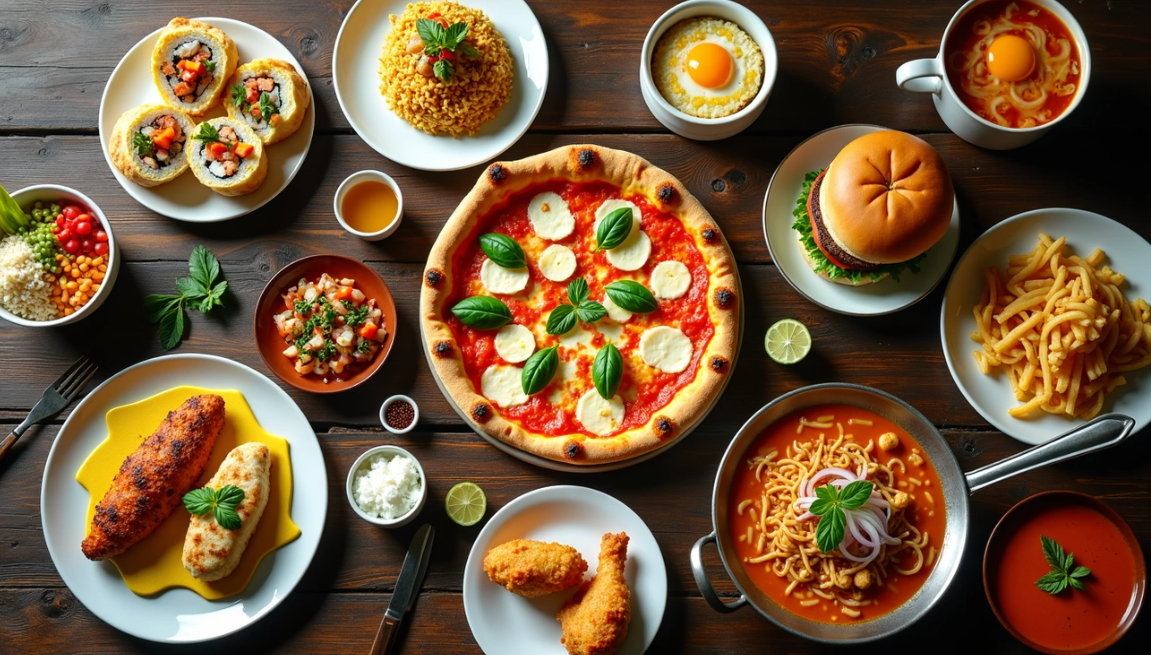
Have you ever wondered what the most popular foods in the world actually are? From pizza enjoyed across countless nations to tacos filling the streets of El Salvador, our global food landscape is incredibly diverse yet surprisingly connected.
When exploring the top 10 favorite foods in the world, I’ve had my taste buds delighted by everything from succulent lobster in Colombia to the impressive variety of potatoes in Peru—over 3,800 types, in fact. What is the most popular food in the world? While pizza certainly makes a strong case, having gained popularity everywhere and available in countless forms [−1], there are many contenders for this title.
Throughout my culinary adventures, I’ve discovered how these beloved dishes adapt to local tastes. In India, pizzas feature paneer and tikka masala, while Japan prefers seafood and mayonnaise toppings [−1]. Similarly, sushi has conquered global palates with varieties created specifically to appeal to different cultural preferences [−1]. Join me as I share my personal experiences with these international favorites and why they’ve earned their place among the world’s most eaten foods.
Pizza

Pizza stands as perhaps the most universally adored food on our planet, crossing geographical boundaries with its irresistible combination of crust, sauce, and toppings. This circular marvel has evolved from humble beginnings to become a global culinary icon, consistently ranking among the top ten foods worldwide in popularity polls.
Origin and traditional ingredients
The modern pizza we recognize today originated in Naples, Italy, in the late 18th century as street food for the poorer residents. Originally sold by vendors, a pizza large enough to feed an entire family could be purchased for just two sous. The dish truly gained prominence in 1889 when Queen Margherita of Italy visited Naples and pizza maker Raffaele Esposito created three types of pizza for her. One of these featured tomatoes, mozzarella, and basil—colors representing the Italian flag—which became known as the “Pizza Margherita” in her honor.
Authentic Neapolitan pizza (pizza napoletana) adheres to strict traditional requirements. According to the Associazione Verace Pizza Napoletana, genuine Neapolitan pizza dough must consist of wheat flour (type 0 or 00), natural Neapolitan yeast or brewer’s yeast, salt, and water. Furthermore, the dough must be kneaded by hand or with a low-speed mixer, formed by hand without a rolling pin, and be no more than 3mm thick. The pizza must then be baked for 60-90 seconds in a 485°C (905°F) stone oven with an oak-wood fire.
Popular global variations
As pizza spread across continents, each region adapted it to local tastes. In Germany, the most popular variations as of 2023 include Salami, Tonno (tuna and onions), and Margherita, with 28.4% of Germans preferring Roman-style pizza, 28.1% favoring Neapolitan style, and 15% enjoying American style.
Sweden contributes unique varieties like kebab pizza with fries on top and even banana curry pizza. Meanwhile, Mexican pizza incorporates ingredients such as chorizo, jalapeños, and avocado. India features spicier, more vegetable-oriented pizzas with distinctive toppings like pickled ginger.
Different crust styles
The pizza crust serves as both canvas and foundation, with several distinctive styles emerging across regions:
- Neapolitan Crust: The “original” Italian style featuring a thin, soft crust with slightly charred, puffy edges
- New York Style: Slightly crispy outside yet thin and pliable enough to fold in half
- Chicago Deep Dish: Featuring a thick crust with a ledge allowing for generous toppings, cheese, and sauce—creating slices up to two inches thick
- Detroit Style: Traditionally baked in rectangular pans (originally automotive parts trays) with a chewy texture and crispy, caramelized edges
- Sicilian: Thick, focaccia-like crust often topped with fresh crushed tomato rather than smooth sauce
- Roman: Thin and crispy crust with toppings placed almost to the edge, resulting in minimal crust around the edges
Cultural adaptations around the world
Beyond merely changing toppings, cultures worldwide have transformed pizza into unique expressions of local identity. Japan adds distinctive ingredients like mayonnaise, corn, seaweed, and squid. In Brazil, green peas and hard-boiled eggs are popular toppings, whereas Argentina is known for “fugazzeta,” a cheese-stuffed crust topped with caramelized onions.
Additionally, some cultures have created entirely new pizza-inspired dishes. Turkey has lahmacun (thin flatbread topped with minced meat), often called “Turkish pizza”. Poland offers zapiekanka—a baguette cut lengthwise and topped with cheese and mushrooms before toasting.
Despite these countless variations, pizza remains one of the most eaten foods in the world. Its journey from the streets of Naples to becoming a global phenomenon demonstrates how a simple combination of dough, sauce and cheese has become one of the top 10 favorite foods in the world.
Rice Dishes
Rice dishes represent humanity’s most versatile culinary canvas, appearing in countless forms across virtually every continent. As one of the most eaten foods in the world, rice has evolved into distinctive regional specialties that showcase both cultural identity and culinary innovation.
Fried rice: a global staple
Originally developed during China’s Sui dynasty (589-618 AD), fried rice emerged as a practical solution for using leftover rice that would otherwise harden after cooling. This ingenious method transformed day-old rice into a new, flavorful dish through stir-frying with oil, eggs, vegetables, and small amounts of meat.
The beauty of fried rice lies in its adaptability. As it spread across Southeast Asia, it gradually transformed into distinctive regional styles:
- Indonesia’s nasi goreng features sweet kecap manis sauce, giving the rice a brown color and caramelized flavor, typically topped with a fried egg
- Thailand’s khao pad sapparod incorporates pineapple chunks, shrimp, and a spice blend of ginger, curry powder, and coriander
- Filipino sinangag distinguishes itself with copious amounts of garlic and is commonly eaten for breakfast
- Peruvian arroz chaufa adds an earthy cumin flavor not found in Chinese versions
The dish has even reached Nigeria, where it’s prepared with turmeric-infused stock, and Japan, where it’s combined with an omelet to create omurice. Essentially, fried rice exemplifies how a simple dish can become one of the top ten foods globally through its adaptability.
Biryani: layers of flavor
Biryani stands among the most popular foods in the world with its aromatic complexity. With Persian roots likely dating to the Mughal era (the word possibly deriving from “birinj,” the Persian word for rice), biryani evolved as a relative of the classic pilaf but with a crucial difference in technique.
Unlike pilaf, biryani is never served as a side dish but always as a main course. What truly distinguishes biryani is its layering method—both physical and flavor-based. The rice, meat, herbs, and spices are arranged in distinct layers, allowing flavors to meld while maintaining the integrity of each ingredient. This prevents the rice from becoming porridge-like and ensures every grain is perfectly seasoned.
The spice layering technique further elevates biryani’s complexity. The same spices are often used in multiple forms (whole vs. ground) and added at different cooking stages to create depth. This sophisticated approach to seasoning produces a dish of remarkable complexity that has secured its place among the top 10 favorite foods in the world.
Paella and other regional rice dishes
Paella, originating from Spain’s Valencia region, represents another pinnacle of rice cuisine. Taking its name from the wide, shallow traditional pan used for cooking, paella in its modern form traces back to the mid-19th century in the rural area around the Albufera lagoon.
The traditional Valencian paella (believed to be the original recipe) features Valencian rice, olive oil, rabbit, chicken, duck, snails, saffron, tomato, green beans, and lima beans. Notably, authentic paella is cooked over an open fire fueled by orange tree and pine branches, infusing the dish with aromatic smoke.
One of paella’s most prized characteristics is the socarrat—a layer of scorched rice that forms at the bottom of the pan. Far from being considered a mistake, this crispy layer is actively sought after by connoisseurs.
Beyond these three iconic preparations, rice dishes continue to demonstrate why they rank consistently among the fav foods globally. From Italian risotto to Mexican arroz con pollo and Indian curry, rice’s remarkable ability to absorb flavors while maintaining distinct textures makes it the foundation for some of the what is the most popular food in the world contenders.
Tacos
Tacos have transcended their humble origins to become culinary ambassadors of Mexican culture and one of the top 10 most popular foods in the world. This hand-held delight, with its perfect balance of textures and flavors, has captivated palates across continents and cultures.
Traditional Mexican roots
The taco’s history runs deep in Mexico’s cultural fabric. Although tacos have been eaten since Indigenous Mexicans domesticated corn, they didn’t truly become established until after World War II. The word “taco” itself possibly originated in 18th-century Mexican silver mines, where it referred to small charges used to excavate ore. Interestingly, one of the first documented taco types was called “tacos de minero” (miner’s tacos).
The authentic taco emerges from a simple yet profound culinary logic—a corn tortilla filled with stew and complemented by sauces or vegetables. This basic structure allowed for endless creativity, eventually establishing tacos as a cornerstone of Mexican identity. As the taco grew in popularity, it became a cultural equalizer in Mexico’s stratified society, with people from all socioeconomic backgrounds gathering around taquerías.
Common fillings and toppings
The versatility of tacos comes alive through their diverse fillings. Traditional Mexican tacos feature options such as:
- Carne asada/a la plancha: Simple grilled steak or chicken
- Al pastor: Pork roasted on a spit similar to Middle Eastern kebabs, usually served with pineapple—considered by many a Mexican national dish despite its immigrant origins
- Carnitas: Pork cuts cooked in pig fat, sometimes with tortillas bathed in pork juices for extra flavor
- De cabeza: Made from cow’s head meat
For toppings, authentic Mexican tacos typically include cilantro, cabbage, white onion, and lime juice. Contrary to common perception, cheese and sour cream are not traditionally found on Mexican tacos. A squeeze of lime is considered essential as it adds acidity that enhances the taco’s flavors.
Soft vs crispy tacos
The debate between soft and crispy tacos highlights a fascinating cultural divide. In Mexico, tacos were traditionally made with soft corn tortillas. The crispy, hard-shell versions now synonymous with American taco chains originated later.
Glen Bell Jr., founder of Taco Bell, played a pivotal role in popularizing hard-shell tacos in America after copying the concept from Mitla Cafe in San Bernardino. He established the first U.S. taco chain to go national in 1962, subsequently changing the American perception of what constitutes a taco.
Hard-shell tacos do exist in Mexico as “tacos dorados” or golden tacos, named for the golden color that results from frying. However, many consider soft tacos superior because they don’t fall apart as easily when bitten. In response to this dilemma, some restaurants now offer a compromise: a soft tortilla wrapped around a hard shell.
Street food culture
Tacos epitomize Mexican street food culture, carrying profound social significance beyond mere sustenance. The theme of “taco hunting” remains embedded in the culture, with many driving around searching for that perfect taco they had previously experienced. As columnist Gustavo Arellano observed, “They’re using the taco as an assertion of their identity”.
Street tacos foster community connection, especially in urban environments. The pandemic and legalization of street vendors in some areas have contributed to a proliferation of taco stands, particularly al pastor spots with their distinctive vertical spits and lights. Primarily, the taco belongs to the streets, serving as a cultural equalizer where the phrase “échate un taco” (“let’s have a taco”) functions as a social truce.
Today, tacos rank undisputedly among the most eaten foods in the world, having successfully crossed oceans to become beloved from Tokyo to New York City.
Sushi

From humble preservation method to global culinary phenomenon, sushi has elevated Japanese cuisine to the ranks of the most popular foods in the world. This deceptively simple combination of vinegared rice and fresh ingredients showcases the perfect marriage of flavor, texture, and visual appeal that transcends cultural boundaries.
Types of sushi: nigiri, maki, temaki
Sushi comes in several distinctive forms, each with unique characteristics. Nigiri, the most recognizable style, consists of hand-pressed rice topped with a slice of fresh fish or seafood, sometimes featuring a dab of wasabi between the two. This style emerged during the latter half of the 20th century and quickly became the standard bearer for sushi globally.
Maki (rolled sushi) features rice and fillings wrapped in nori seaweed and sliced into bite-sized pieces. These versatile rolls range from hosomaki (thin rolls with a single filling) to futomaki (“fat rolls”) containing multiple ingredients that can reach 1.5 inches in diameter.
Temaki (hand rolls) presents as cone-shaped creations meant to be eaten immediately. About 10 centimeters long, these nori cones filled with rice and ingredients are designed to be eaten with your hands, as they’re too awkward for chopsticks. Popular varieties include spicy tuna temaki and salmon avocado temaki.
Key ingredients and condiments
At sushi’s heart lies vinegared rice (shari), which gives it a subtle tangy-sweet flavor. This rice must be prepared to exacting standards—sticky enough to hold together yet not mushy. Traditionally, sushi is accompanied by several key condiments:
- Wasabi: Provides a hot, sharp taste particularly well-suited for fresh seafood
- Pickled ginger (gari): Acts as a palate cleanser between different sushi pieces
- Soy sauce: Adds umami and saltiness, traditionally applied to the fish rather than rice
The nori (seaweed) wrapper contributes a subtle marine flavor and satisfying crispness that contrasts with the soft rice.
Sushi’s global popularity
Initially sold by street vendors to busy Edo (Tokyo) residents, sushi has undergone remarkable international expansion. A pivotal moment came in the 1960s with the creation of the California roll in Los Angeles, which used avocado and crab instead of raw fish, introducing sushi to broader Western audiences.
Fusion sushi trends
As sushi spread globally, it began incorporating elements from other cuisines. The sushi burrito (sushirrito) represents a fusion with overstuffed American burritos, featuring traditional sushi fillings wrapped in a large nori sheet. Similarly, countries have created unique regional adaptations—Brazilian sushi often includes cream cheese, whereas South Korean variants might be battered and deep-fried.
Currently, retail sushi is one of the fastest-growing segments in supermarkets, becoming a $2.80 billion business in 2024, up 7% from the previous year. This growth confirms sushi’s position among the top 10 favorite foods in the world.
Pasta Dishes
Pasta’s seemingly endless variety makes it one of the most popular foods in the world, with hundreds of shapes and countless sauce combinations delighting palates globally. This Italian staple has conquered dinner tables across continents through its perfect balance of simplicity and versatility.
Classic Italian pasta types
Italian cuisine classifies pasta into three main categories: pasta asciutta (served with sauce), pasta in brodo (in soup), and pasta al forno (baked). Moreover, pasta comes in both fresh and dried varieties, each with distinct characteristics. Fresh pasta, traditionally made with eggs and flour, cooks quickly and pairs beautifully with delicate sauces that showcase its tender texture. Dried pasta, on the contrary, contains primarily semolina flour and water, requires longer cooking times, and stands up better to hearty sauces.
The shape of pasta isn’t merely esthetic—it’s functional. Long, thin types like spaghetti and linguine excel with smooth, silky sauces. Tube-shaped varieties such as rigatoni and penne trap chunky, hearty sauces inside their hollows. Shaped pastas including farfalle and orecchiette have unique surfaces designed to capture specific sauce types.
Popular sauces and pairings
Pasta’s global appeal stems primarily from how each shape pairs perfectly with specific sauces. Certainly, marinara sauce clings ideally to spaghetti or penne, while rich alfredo sauce coats flat pastas like fettuccine. Bolognese, a hearty meat sauce with small amounts of tomato concentrate, traditionally accompanies tagliatelle or pappardelle.
Regional Italian sauces showcase local culinary identity: Bologna’s meat-based sauces, Genoa’s green pesto, and southern Italy’s seafood-centric creations. Traditional carbonara contains eggs, Parmesan, pancetta, and black pepper—notably without cream—and pairs beautifully with spaghetti or bucatini.
Modern twists on traditional recipes
Nowadays, creative chefs worldwide adapt classic pasta recipes to suit local tastes. In Britain, for example, pasta’s popularity exploded in the 1960s, with spaghetti bolognese becoming a household staple. Consequently, international variations have flourished, including pasta with broccoli rabe and sausage in American-Italian cuisine.
Contemporary trends include cream-free carbonara variations, mushroom substitutes for meat, and additions like spring greens that balance rich flavors. Fusion dishes incorporate global influences, as seen in chorizo carbonara or smoked salmon adaptations. Ultimately, pasta’s adaptability secures its position among the top 10 most popular foods in the world, allowing endless reinvention while honoring tradition.
Noodles
Across the Asian culinary landscape, noodles reign as cultural icons and daily sustenance for billions, earning their place among the top ten foods globally. Their remarkable versatility transforms simple ingredients into dishes that comfort, celebrate, and sustain communities worldwide.
Ramen, pho, and udon explained
Ramen, originally Chinese-inspired but now quintessentially Japanese, derives its distinctive springy texture from kansui (alkaline water) which gives the wheat noodles their yellowish hue. These noodles serve as the foundation for countless regional variations across Japan—from Yokohama’s rich combination of tonkotsu and soy sauce broths to Sapporo’s miso-based creations.
Vietnamese pho features rice noodles bathed in a fragrant broth made from simmering bones, spices, and herbs for hours. Unlike ramen’s wheat-based composition, pho noodles offer a lighter texture that complements the delicate flavors of the accompanying herbs and lime.
Udon stands apart with its remarkable thickness and chewy bite. These dense Japanese noodles contain simply wheat flour, water, and salt—notably without eggs, making them vegan-friendly. Their substantial texture allows them to maintain integrity even in hot soups.
Stir-fried vs soup-based noodles
Soup-based noodle dishes follow one of two preparation methods. The “assembly method” involves adding pre-cooked noodles to a bowl, ladling over stock, then finishing with toppings—ideal for restaurant service. Alternatively, the “direct cooking method” creates quicker soups by boiling flavorful ingredients together, often cooking noodles simultaneously within the broth.
Stir-fried noodles offer contrasting textures through techniques that preserve their firmness. Chinese chow mein noodles, traditionally stir-fried, maintain a satisfying crispness. In Thailand, pad Thai combines flat rice noodles with proteins and bean sprouts, creating the perfect balance of sweet, sour, and savory flavors.
Regional noodle specialties
Longevity noodles hold profound cultural significance in Chinese traditions, their length symbolizing prosperity and long life during birthdays. Throughout China, regional specialties abound—Beijing’s soybean paste noodles represent simple comfort food, whereas Lanzhou’s hand-pulled noodles showcase remarkable craftsmanship.
Korean cuisine contributes japchae, which combines sweet potato noodles with colorful vegetables and beef in a soy-based marinade. In Southeast Asia, Singapore’s influence created fusion dishes like Hawaii’s saimin, which blends Japanese, Chinese, Filipino, Portuguese, and Polynesian culinary elements.
The cultural importance of noodles extends beyond mere sustenance—they symbolize unification in Italy and express folklore through naming traditions in China. This powerful combination of versatility, symbolism, and nutritional value secures noodles’ position among the most popular foods in the world.
Curry Dishes
The term “curry” encompasses a global family of dishes united by their aromatic spice mixtures, securing their place among the most popular foods in the world. Originating as early as 2500 BCE in what is now Pakistan, curry has evolved through centuries of colonization, trade, and migration to become a truly international phenomenon.
Indian curries: tikka masala, korma, vindaloo
India’s curry landscape reflects its vast cultural diversity. Butter chicken (murgh makhani), created in 1948 by chef Kundan Lal Gujral in New Delhi, features tandoor-baked yogurt-marinated chicken in a rich tomato-based sauce. Tikka masala, though wildly popular, actually originated in Britain, where it’s considered by some to be the national dish of England. This safety-cone-orange creation begins with tandoori chicken simmered in a creamy tomato sauce.
Korma offers a gentler introduction to curry, focusing on flavor rather than heat. This creamy comfort dish braises meat in a yogurt sauce with ground nuts and gentle spices like cardamom and cinnamon. At the opposite end of the spectrum, vindaloo brings intense heat with its Portuguese-influenced recipe. Originating in Goa, this fiery dish combines pork with vinegar, tomato, garlic, and numerous red chilies.
Thai curries: red, yellow, massaman
Thai curries (or “gaeng”) come in distinctive colors and flavor profiles. What separates them from Indian varieties is their use of fermented shrimp paste, lemongrass, and palm sugar. Red curry, made with dried red chilies, offers moderate heat and deep flavor. Yellow curry incorporates turmeric and curry powder for a milder, slightly sweet experience.
Massaman curry represents Thai cuisine’s multicultural influences. With Persian roots, this mild curry uses warm spices typically found in Indian cuisine—cinnamon, cardamom, and cloves—alongside peanuts and potatoes. Its rich, nutty flavor makes it accessible even to those new to spicy foods.
Curry as a global comfort food
Undoubtedly, curry has traveled remarkably far from its origins. Japanese curry (karē raisu) became a national staple after being introduced by British naval officers in the late 19th century. Currently, it’s so beloved that Japanese people eat curry approximately 1.5 times weekly.
Throughout the Caribbean, curry arrived with indentured Indian laborers, creating regional adaptations that became comfort food staples. Even in North Korea, curry packages sent from Japan became valuable currency during food shortages.
Hamburgers
The humble hamburger represents both culinary simplicity and American cultural export, earning its spot among the most popular foods in the world with an estimated 50 billion consumed annually in the United States alone. As a quintessential fast food that transcended its origins, the hamburger’s journey from European ports to global dominance showcases how a basic meat sandwich became a worldwide icon.
The evolution of the hamburger
Historically, the hamburger traces its roots to Hamburg, Germany, where ground beef was served as “Hamburg steak” – a reference found in the Oxford English Dictionary as early as 1802, describing it as “a hard slab of salted, minced beef, often slightly smoked, mixed with onions and breadcrumbs”. The transition to sandwich form occurred in America, with multiple origin claims spanning the 1880s to early 1900s. Nonetheless, the burger’s true explosion came during the early 20th century, perfectly timed with America’s industrialization when people needed food both “fast” and “cheap”.
Fast food vs gourmet burgers
Fundamentally, the difference between fast food and gourmet burgers lies in ingredients and process. Fast food prioritizes efficiency, consistency, and standardization, offering lower prices and wider availability. White Castle, founded in 1921, pioneered many fast-food concepts including take-out service, newspaper advertising, and their distinctive “sliders” sold for just five cents. Currently, gourmet burgers focus on premium ingredients – including custom blends with 20-30% fat content, selected cuts, and even dry-aged beef. These upscale creations typically feature brioche or potato buns toasted inside to prevent sogginess, alongside homemade sauces and carefully controlled cooking techniques.
Plant-based and alternative patties
Alongside traditional beef options, plant-based alternatives have recently reshaped the burger landscape. Beyond Meat, featuring 21g of plant protein per patty and zero cholesterol, uses ingredients like soybeans, sunflowers, and coconuts. Impossible Foods similarly creates plant-based patties that “bleed” like real meat, using soy leghemoglobin to mimic beef’s flavor and appearance. Interestingly, in blind taste tests, the Impossible burger consistently outperforms other plant-based options, with tasters noting its remarkable similarity to real meat patties. The introduction of these alternatives at major chains like Burger King demonstrates how even this classic top ten food continues evolving with changing consumer preferences.
Seafood Dishes
Maritime cuisine captivates palates worldwide, with seafood dishes consistently ranking among the top 10 most popular foods in the world. From coastal villages to inland restaurants, these ocean-inspired creations showcase how simple cooking methods can yield extraordinary results.
Fish and chips: a British classic
This iconic dish combines deep-fried battered fish with thick-cut potato chips, traditionally served with malt vinegar. Originally believed to have originated in England, food historians now trace its roots to 15th century Portugal. During World War II, Winston Churchill protected fish and chips from rationing, deeming them “good companions” vital for national morale. British soldiers even used “fish” and “chips” as identification codes during the D-Day landings.
Ceviche and raw seafood dishes
Peru’s national dish, ceviche, features raw fish “cooked” by citrus juice that denatures proteins. This refreshing preparation dates back to the Inca Empire and is now celebrated during Peru’s Day of the Sea. The dish requires sashimi-grade fish—sea bass, halibut, and shrimp are popular choices—typically served with corn, sweet potato, or plantain chips.
Grilled and baked seafood options
Globally, seafood maximizes flavor through simple grilling techniques. Portugal particularly embraces grilled sardines, marinated in olive oil, lemon juice, and herbs. Throughout the Mediterranean, seafood is often prepared with minimal seasonings to highlight its natural flavors, making these dishes perennial fav foods worldwide.
Fried Chicken
Crispy on the outside and juicy within, fried chicken has carved its path to become one of the top 10 most popular foods in the world through regional adaptations that showcase its remarkable versatility.
Southern-style fried chicken
The quintessential Southern fried chicken begins with a buttermilk brine that ensures tender, juicy meat. This traditional preparation involves dredging chicken in seasoned flour before frying to achieve that signature craggy crust. Primarily served for Sunday dinners historically, it became known as the “Gospel Bird” due to its revered status at church gatherings. Throughout the American South, fried chicken evolved from Scottish and African culinary influences, with enslaved African Americans perfecting the techniques that would define this iconic dish. Nowadays, variations include double-dredging in flour and buttermilk or battering for extra crunch.
Korean fried chicken and global takes
Korean fried chicken (or “chikin”) stands apart with its distinctively crisp texture achieved through double-frying. This technique creates an extraordinarily crunchy exterior while keeping the meat juicy. A recent global survey revealed Korean-style chicken ranked #1 in both preference and eating frequency. The popular yangnyeom chicken features a sweet-spicy gochujang sauce coating, typically enjoyed alongside cold beer in a cultural phenomenon known as “chimaek”. Over time, international variations have emerged—Indonesia’s ayam goreng marinated in aromatic spices, India’s Chicken 65 with its fiery red coating, and Japan’s karaage with its light, crisp shell.
Spicy, crispy, and sweet variations
Nashville hot chicken delivers intense heat through cayenne-infused oil brushed over freshly fried pieces. In contrast, honey butter-coated variants from Korea offer sweet, decadent flavors. Throughout Asia, regional adaptations feature distinctive spice profiles—Thailand incorporates lemongrass and galangal, whereas Chinese variants might include five-spice powder. Given that the global fried chicken market reached $44.56 billion in 2024 and is projected to grow to $78.92 billion by 2035, this beloved comfort food has secured its position among the most eaten foods in the world.
Conclusion
From Southern Sunday tables to Seoul’s bustling streets, fried chicken’s irresistible appeal has made it a universal fav food. Its adaptability to local ingredients and cooking methods ensures this crispy delight will remain among the most popular foods in the world for generations to come.
FAQs
Q1. What is considered the most universally popular food in the world?
Pizza stands as one of the most universally beloved foods, with its combination of crust, sauce, and toppings appealing to people across different cultures and continents. Its adaptability to local tastes and ingredients has helped maintain its global popularity.
Q2. How has Korean fried chicken become a global phenomenon?
Korean fried chicken has gained worldwide recognition through its unique double-frying technique, which creates an exceptionally crispy exterior while maintaining juicy meat inside. Its various flavors, particularly the sweet-spicy yangnyeom style, have made it a favorite in many countries.
Q3. Why are rice dishes so prevalent in global cuisine?
Rice dishes are widespread due to their remarkable versatility and ability to absorb flavors while maintaining distinct textures. From biryani to paella and fried rice, each culture has developed unique preparations that showcase local ingredients and cooking techniques.
Q4. What makes authentic sushi different from its global variations?
Traditional sushi relies on carefully prepared vinegared rice (shari) and fresh ingredients, particularly seafood. While global variations often incorporate non-traditional elements like cream cheese or deep-frying, authentic sushi emphasizes simplicity and the natural flavors of its components.
Q5. How have tacos evolved from their Mexican origins?
While traditional Mexican tacos feature soft corn tortillas with simple fillings like grilled meats, onions, and cilantro, they’ve evolved globally to include various interpretations. The introduction of hard-shell tacos and diverse fusion fillings has transformed this street food into an international favorite while maintaining its basic format of filled tortillas.

Hi, I’m Ankit Bisht. I’m an SEO and content marketing specialist with over 7 years of experience helping businesses strengthen their online presence. I focus on developing effective SEO strategies, in-depth keyword research, and data-driven content optimization to boost visibility, rankings, and traffic. I’m passionate about exploring the latest SEO trends, analyzing performance data, and implementing smart solutions that deliver measurable results.