

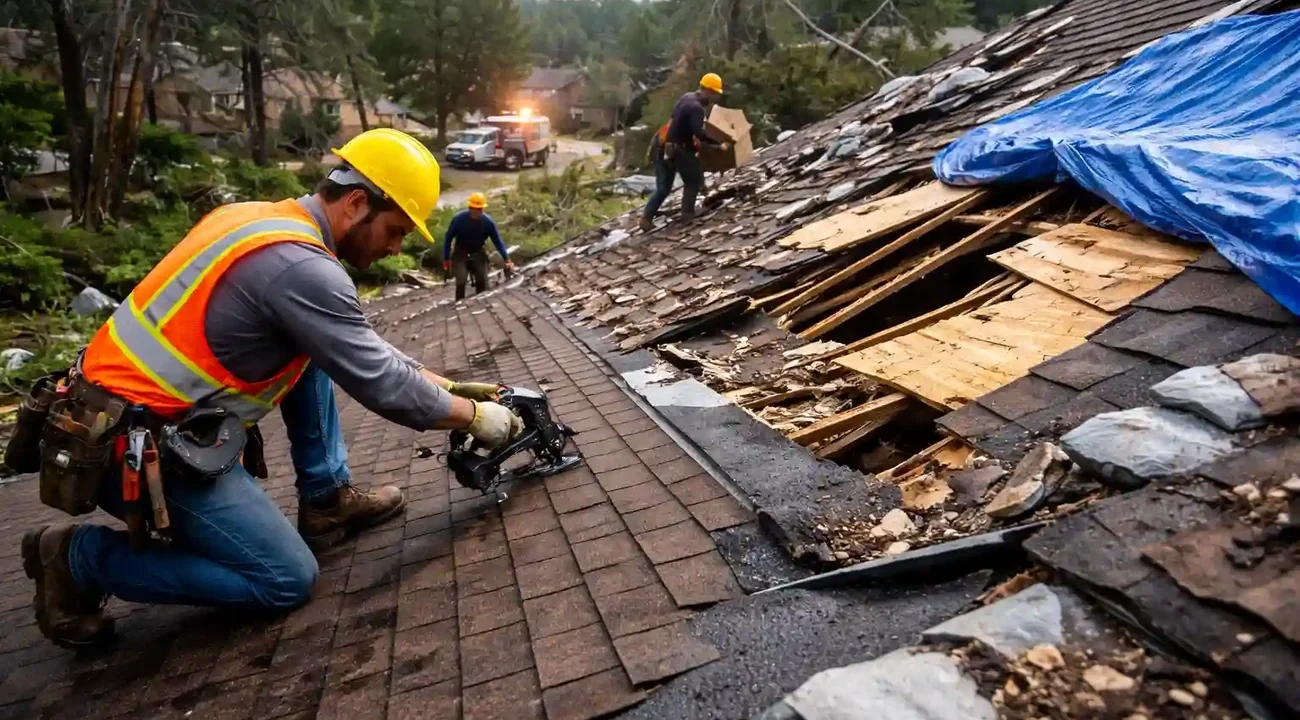
When storm damage repair becomes necessary, your quick response can prevent minor issues from turning into costly disasters. Hurricane-force winds of 74 mph or greater can cause visible damage to your home’s roof, while even gale-force winds between 39-54 mph might leave you with missing shingles or structural concerns.
After a severe storm, many homeowners feel overwhelmed and unsure where to turn. However, understanding common roofing storm damage types and immediate action steps can make all the difference. From wind damage to your roof that tears away shingles to hailstones that leave dents or pockmarks, various weather events can compromise your roof’s integrity. Additionally, water stains on ceilings typically indicate a roof leak that shouldn’t be ignored, as these seemingly minor issues can quickly lead to structural problems and mold.
In this guide, we’ll walk you through the essential steps to assess and address storm damage to your roof. We’ll cover everything from initial inspection techniques to temporary fixes, professional help, and navigating the insurance claim process. By following this advice, you’ll be better prepared to protect your home and restore your peace of mind after the storm passes.
Check for Roof Damage After the Storm
Once the storm passes, promptly assessing your roof for damage is crucial. Before rushing onto your roof, remember that safety comes first. Begin by examining what you can see from the ground, as this provides valuable initial insights without putting yourself at risk.
Look for missing or curled shingles
Start your inspection by walking around your property’s perimeter. Missing shingles are often the most visible sign of storm damage and should be addressed quickly, especially during wet seasons. Though not an immediate emergency, these damaged areas can allow moisture to penetrate your home, potentially leading to rot, mold, and expensive water damage.
Look for shingles that have blown off completely or those showing signs of damage. Wind can cause shingles to curl upward, creating vulnerable points in your roof’s protective layer. Also examine shingles for cracks, breaks, or unusual curling at the edges—these are clear indicators that your roof has sustained wind damage.
During your ground assessment, pay attention to any roof debris in your yard, as this often indicates damaged sections above. If you’re comfortable using binoculars, they can provide a safer way to spot potential issues without climbing onto a potentially unstable roof.
Inspect gutters, vents, and flashing
Next, examine your gutters, downspouts, and flashing for signs of damage. After storms, check if gutters remain securely attached to your home, as separation frequently occurs during heavy winds and rain. Dented or twisted gutter sections require professional attention immediately.
Pay close attention to roof penetrations like vents, chimneys, and skylights. These junction areas are particularly vulnerable to leaks. Inspect the flashing (the metal strips that seal these areas) for rust, cracks, gaps, or loose sections that might allow water intrusion. Damaged or corroded flashing can let water penetrate your roof’s interior structure.
Furthermore, examine your gutters and downspouts for shingle granules. Finding substantial amounts of granules (which look like small, dark-colored rubber balls or sand) indicates potential roof deterioration. While some granule loss after storms is normal, large accumulations suggest significant damage that needs addressing.
Check attic and ceilings for leaks
The interior inspection is equally important for detecting hidden roof damage. Your attic and ceilings are typically the first places to show signs of problems that aren’t visible from outside. Enter your attic with a flashlight to look for:
- Sunlight shining through roof beams
- Damp or wet insulation
- Musty odors signaling moisture
- Water stains on wooden surfaces
- Signs of mold growth
On your home’s ceilings, watch for water stains that appear as discolored patches or streaks—these reveal leak pathways. Brown or yellowish spots on ceilings and walls are red flags that water has been seeping through. Consequently, check for bubbling or peeling paint, as these often indicate moisture has penetrated interior surfaces.
Essentially, don’t overlook less obvious signs like sagging or warped roof decking, as these deformities show moisture has compromised your roof’s structural integrity. Additionally, examine walls around windows, as these areas commonly develop leaks after storms.
If you notice any of these warning signs, document everything thoroughly with photos and notes. This documentation will prove invaluable when filing insurance claims or consulting with roofing professionals. Remember that addressing storm damage promptly helps minimize repair costs and prevents future complications.
Understand the Types of Storm Damage

Storms impact roofs in distinct ways, with each type of damage requiring specific repair approaches. Recognizing these patterns helps determine whether you need immediate storm damage repairs or can safely wait for professional assessment.
Wind damage to roof and shingles
Wind affects roofs through complex patterns of pressure and suction. High winds don’t simply blow across your roof—they create uplift forces that can lift shingles, loosen nails, and expose the underlayment to further damage. This uplift is strongest at roof corners and edges, making these areas particularly vulnerable to wind damage.
Wind damage typically appears as creased tabs (where shingles bend but don’t tear completely), lifted edges breaking adhesive seals, or missing shingles that expose the underlayment. Moreover, you might notice a diagonal pattern of damage that reveals the wind’s direction. Shingles with broken sealant strips remain particularly susceptible to future storms, as the compromised seal allows wind to get underneath and cause further lifting.
Most standard asphalt shingles resist winds up to 60 mph, while premium shingles can withstand gusts reaching 130 mph. Nonetheless, even moderate winds can damage shingles that are already compromised by age or improper installation.
Hail impact and granule loss
Hail creates distinctive damage patterns that may not cause immediate leaks but significantly reduce your roof’s lifespan. Upon impact, hailstones can dent metal, crack shingles, and dislodge protective granules. The resulting “bruised” shingles often feel soft when pressed, and you’ll notice circular dents on softer roofing materials like vents and flashing.
Initially, hail damage might appear as dark spots on shingles where granules have been knocked loose. Subsequently, these areas create shiny spots where the underlying asphalt becomes exposed. This exposure accelerates aging as UV rays break down the unprotected asphalt. Indeed, granule loss represents the first stage in a chain reaction that leads to brittleness, cracking, and eventually leaks.
Hail damage isn’t always immediately visible. In fact, without proper inspection, hidden damage can develop into cracks and tears months later as the shingles continue to wear. For asphalt shingles, look specifically for:
- Random damage patterns with black spots
- Exposed fiberglass mat where surface material has broken away
- Cracks in the surfacing that radiate from points of impact
- Granule accumulation in gutters and downspouts
Water pooling and drainage issues
Water pooling (or “ponding”) occurs when water collects in puddles on your roof instead of draining properly. Generally, roof systems should have positive drainage, meaning water should flow off within 48 hours after rainfall. Water that remains longer indicates problems requiring attention.
Ponding accelerates roof deterioration through several mechanisms. The excess weight puts stress on your structure—even a small pond can add hundreds of pounds to your roof. Additionally, standing water degrades roofing materials, enabling the growth of algae and moss that further damage your roof.
Common causes of water pooling include improper installation (where the roof lacks sufficient slope for drainage), clogged or slow-moving drains, compressed insulation creating low spots, and structural settling over time. Large roof units like HVAC systems or skylights often create areas where water collects because it cannot flow past these obstructions.
Fallen debris and punctures
Debris impact creates some of the most severe and immediate roofing problems during storms. Fallen tree limbs can puncture through roofing materials, crack tiles, or damage the structural rafters beneath. Wind speeds reaching 58-74 mph can send airborne debris crashing into your roof, creating vulnerabilities around critical areas like chimneys and vents.
Unlike other damage types, debris impacts often require emergency storm damage repair services as they create immediate entry points for water. Punctures appear as holes through roofing material that expose the underlayment or even the interior structure. Smaller debris like branches or leaves can clog gutters, leading to backup issues that compound existing problems.
After storms, inspect your roof for both large impacts and smaller debris accumulation. Even minor punctures need addressing promptly, as they provide direct pathways for moisture to reach your home’s interior structure, potentially leading to rot and mold.
Apply Temporary Roof Fixes

Image Source: Gouge Quality Roofing
Immediately after identifying storm damage, applying temporary fixes can prevent further deterioration until professional repairs are possible. These urgent measures can save thousands in additional repair costs while keeping your home protected.
Use tarps to cover exposed areas
For larger damaged areas or missing shingles, a heavy-duty tarp provides effective temporary protection. The tarp should extend at least 4 feet beyond the damaged area on all sides to prevent water infiltration. To properly install a tarp:
- Measure the damaged section and select a tarp that’s thick enough (6-8 mil thickness minimum) and UV-resistant
- Clean the area of debris before placing the tarp
- Position the tarp to overlap the roof ridge when possible, as this creates a gravity-favored path that resists uplift
- Secure the tarp using wooden boards (2x4s) rather than directly nailing through the tarp itself
- Roll the tarp edges around boards and anchor them using cap nails or deck screws every 12 inches
Remember, a properly installed tarp can last up to 90 days maximum, giving you time to arrange permanent repairs.
Seal small leaks with roofing cement
For minor leaks or damaged flashing, roofing cement provides a quick, temporary solution. First, ensure the surface is completely dry before application. Then:
Apply the roofing cement liberally along cracks or gaps using a putty knife or caulking gun. For loose shingles, gently lift them, apply cement underneath, press down, and add additional cement on top of any exposed nail heads.
This temporary patch can typically last 30-60 days before degrading from UV exposure and weather conditions.
Clear debris safely from the roof
Before applying any temporary fixes, removing debris is vital. Always prioritize safety with these precautions:
Work on clear, dry days—never attempt repairs during rain or when the roof remains wet. Wear non-slip shoes, gloves, and safety goggles. Use a soft broom or roof rake to gently remove leaves and branches without damaging shingles.
Start cleaning from the top (ridge) and work downward to avoid creating piles of debris in already-cleaned areas. Collect debris in buckets or tarps rather than sweeping it onto the ground.
Remember that these fixes are temporary solutions until professional repairs can be completed. Document all damage with photos to assist with insurance claims, and contact a licensed roofing contractor as soon as possible.
Call a Roofing Contractor for Inspection
After addressing immediate protective measures, securing professional help becomes your top priority. A qualified roofer provides thorough assessment and proper documentation needed for insurance claims.
How to choose a licensed and insured roofer
Selecting a reliable contractor starts with verifying credentials. Request proof of state licensing, general liability insurance, and workers’ compensation coverage before allowing anyone on your property. Legitimate contractors maintain permanent local addresses rather than just P.O. boxes, which often signal fly-by-night operations. Furthermore, check their reputation through online reviews, the Better Business Bureau, and ask for references from previous clients.
What to expect during a professional inspection
During a comprehensive inspection, professionals examine your entire roof system. They’ll assess shingles, flashing, vents, and check for structural issues like sagging. Afterward, you’ll receive a detailed report documenting all damage with supporting photographs. This documentation proves invaluable when filing insurance claims.
Avoiding storm chasers and scams
“Storm chasers” are transient contractors who travel to storm-affected areas, often using high-pressure tactics to secure quick contracts. Beware of door-knockers claiming you have damage without thorough inspection. Remember that most insurance policies allow 1-2 years to file claims, hence there’s no need to rush decisions. Accordingly, avoid contractors requesting large upfront payments or offering suspiciously low bids. If someone appears at your door after a storm, simply thank them and contact your insurance company first. This approach prevents hasty decisions that might lead to substandard repairs or financial loss.
File Your Insurance Claim the Right Way
Properly documenting and filing an insurance claim makes all the difference between swift approval and frustrating delays. Insurance companies rely heavily on detailed evidence when processing storm damage repair claims.
Document damage with photos and notes
First, capture comprehensive evidence of all roof damage. Take clear photos from multiple angles showing missing shingles, dents, and water intrusion. Meanwhile, record the date and time of the storm along with weather conditions. Throughout the documentation process, maintain a detailed written record of your observations and conversations with professionals.
Understand your policy and deductible
Insurance policies typically cover sudden and accidental damage from wind, hail, or storms—not wear and tear from neglect. Your deductible is what you’ll pay out-of-pocket before insurance coverage applies. Two common types exist:
- Flat deductibles: Fixed amounts between $500-$2,500
- Percentage-based deductibles: Usually 1-5% of your home’s insured value
Since most standard homeowners insurance provides replacement cost coverage, expect two checks—the first as partial payment, with the remainder coming after repairs begin.
Meet with the insurance adjuster
Whenever possible, accompany the adjuster during their inspection. Prepare by having your documentation, contractor’s report, and policy details ready. As a rule, adjusters verify damage causes, assess your roof’s age, and determine repair costs. For the purpose of transparency, request itemized invoices that match what’s submitted to your insurer.
Conclusion
Storm damage to your roof demands quick action and careful attention. Though unexpected weather events can leave you feeling overwhelmed, the steps outlined in this guide provide a clear path forward. Your swift response after identifying missing shingles, water stains, or debris impact can prevent minor issues from escalating into major structural problems.
Remember that safety comes first during any inspection or temporary repair. Ground-level assessments offer valuable insights without putting yourself at risk. Additionally, properly installed tarps and carefully applied roofing cement serve as effective short-term solutions until professional help arrives.
Choosing a reputable, licensed roofing contractor remains crucial for proper repairs. Therefore, take time to verify credentials and avoid storm chasers who might exploit your situation. Likewise, thorough documentation through photos and detailed notes strengthens your position when filing insurance claims.
While dealing with roof damage certainly feels stressful, following this systematic approach helps restore your home’s protection and your peace of mind. Most importantly, addressing storm damage promptly not only preserves your property value but also ensures your family stays safe and comfortable regardless of weather conditions. Armed with this knowledge, you can confidently navigate roof repairs after any storm and protect your most valuable investment.
Key Takeaways
After storm damage, quick assessment and proper response can prevent minor roof issues from becoming costly disasters that threaten your home’s structural integrity.
• Inspect your roof safely from the ground first, looking for missing shingles, damaged gutters, and interior water stains before attempting any repairs.
• Apply temporary fixes like tarps and roofing cement immediately to prevent further water damage while waiting for professional assessment.
• Choose licensed, insured contractors with local addresses and avoid “storm chasers” who use high-pressure tactics after severe weather events.
• Document all damage thoroughly with photos and detailed notes to strengthen your insurance claim and ensure proper coverage.
• File insurance claims promptly but don’t rush contractor decisions—most policies allow 1-2 years to submit claims for storm damage.
Remember that addressing storm damage systematically protects both your property value and your family’s safety, turning a stressful situation into a manageable repair process.
FAQs
Q1. Does homeowners insurance cover roof damage from storms?
Typically, homeowners insurance covers roof damage caused by sudden, accidental events like storms. This includes damage from high winds, hail, or fallen trees. However, coverage may not apply to damage resulting from normal wear and tear or lack of maintenance.
Q2. How soon after a storm should I inspect my roof?
It’s best to inspect your roof as soon as it’s safe to do so after a storm. Start with a ground-level assessment, looking for obvious signs of damage like missing shingles or debris. If you notice any issues, it’s important to address them promptly to prevent further damage.
Q3. What are some temporary fixes I can apply to my storm-damaged roof?
For immediate protection, you can cover exposed areas with heavy-duty tarps, ensuring they extend at least 4 feet beyond the damaged section. Small leaks can be temporarily sealed with roofing cement. However, these are short-term solutions, and professional repairs should be arranged as soon as possible.
Q4. How do I choose a reliable roofing contractor for storm damage repairs?
Look for a contractor who is licensed, insured, and has a local presence. Verify their credentials, check online reviews, and ask for references from previous clients. Be wary of “storm chasers” who may use high-pressure tactics to secure quick contracts.
Q5. What documentation do I need for a roof damage insurance claim?
To file an insurance claim, thoroughly document the damage with clear photos from multiple angles. Keep a detailed written record of your observations, including the date and time of the storm. It’s also helpful to have a professional inspection report from a licensed roofing contractor.

Hi, I’m Ankit Bisht. I’m an SEO and content marketing specialist with over 7 years of experience helping businesses strengthen their online presence. I focus on developing effective SEO strategies, in-depth keyword research, and data-driven content optimization to boost visibility, rankings, and traffic. I’m passionate about exploring the latest SEO trends, analyzing performance data, and implementing smart solutions that deliver measurable results.