

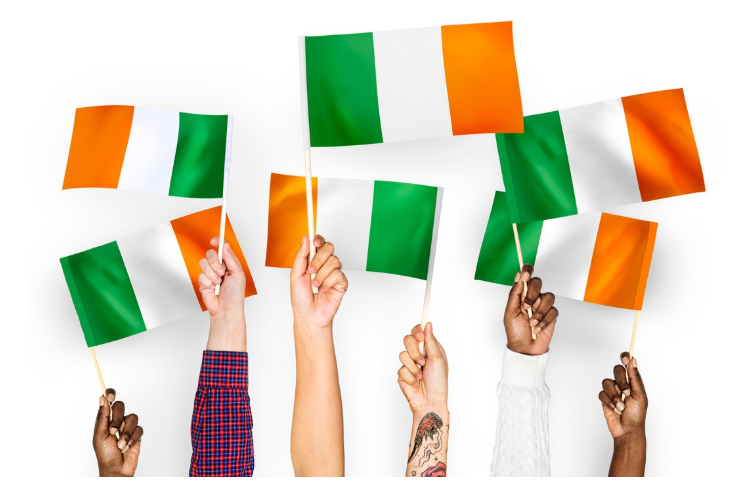
Looking to level up your trivia skills? This article breaks down the four countries that use green, white, and orange in their flags, along with the meanings behind each colour.
🇮🇪 Ireland
4
-
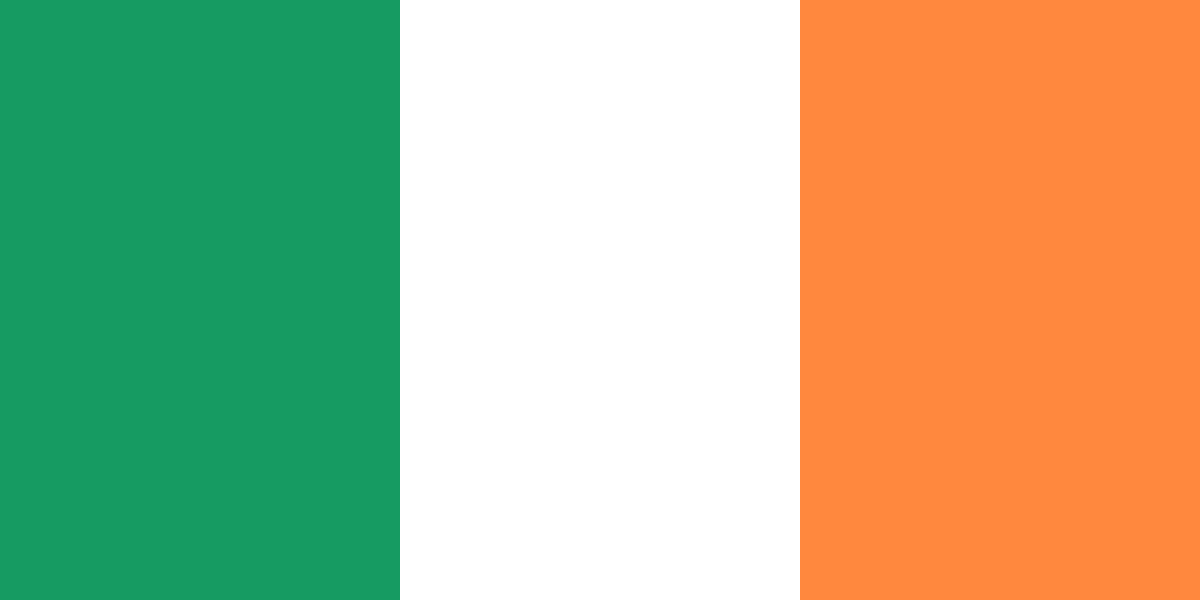
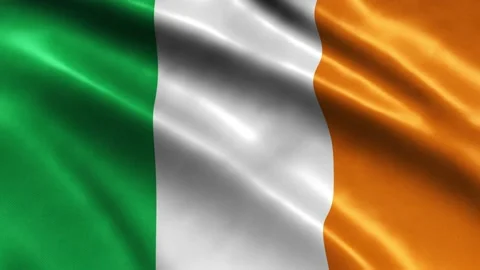
Ireland’s flag is a vertical tricolour — from left to right: green, white, orange. Ireland Before You Die+233travels.com+2
-
In this flag: green stands for Irish Catholics (or more broadly, the Gaelic/Irish tradition), orange represents the Protestant community, and white in the middle symbolises peace and unity between these groups.
🇨🇮 Ivory Coast (Côte d’Ivoire)


-
Ivory Coast’s flag is also a vertical tricolour — but the order is orange (left), white (center), green (right). Wikipedia+1
-
On this flag: orange is said to represent the savanna grasslands (or land/nature), white stands for peace and rivers or unity, and green reflects the forests (or hope for a prosperous future). Wikipedia+21001flags.com+2
🇳🇪 Niger

-
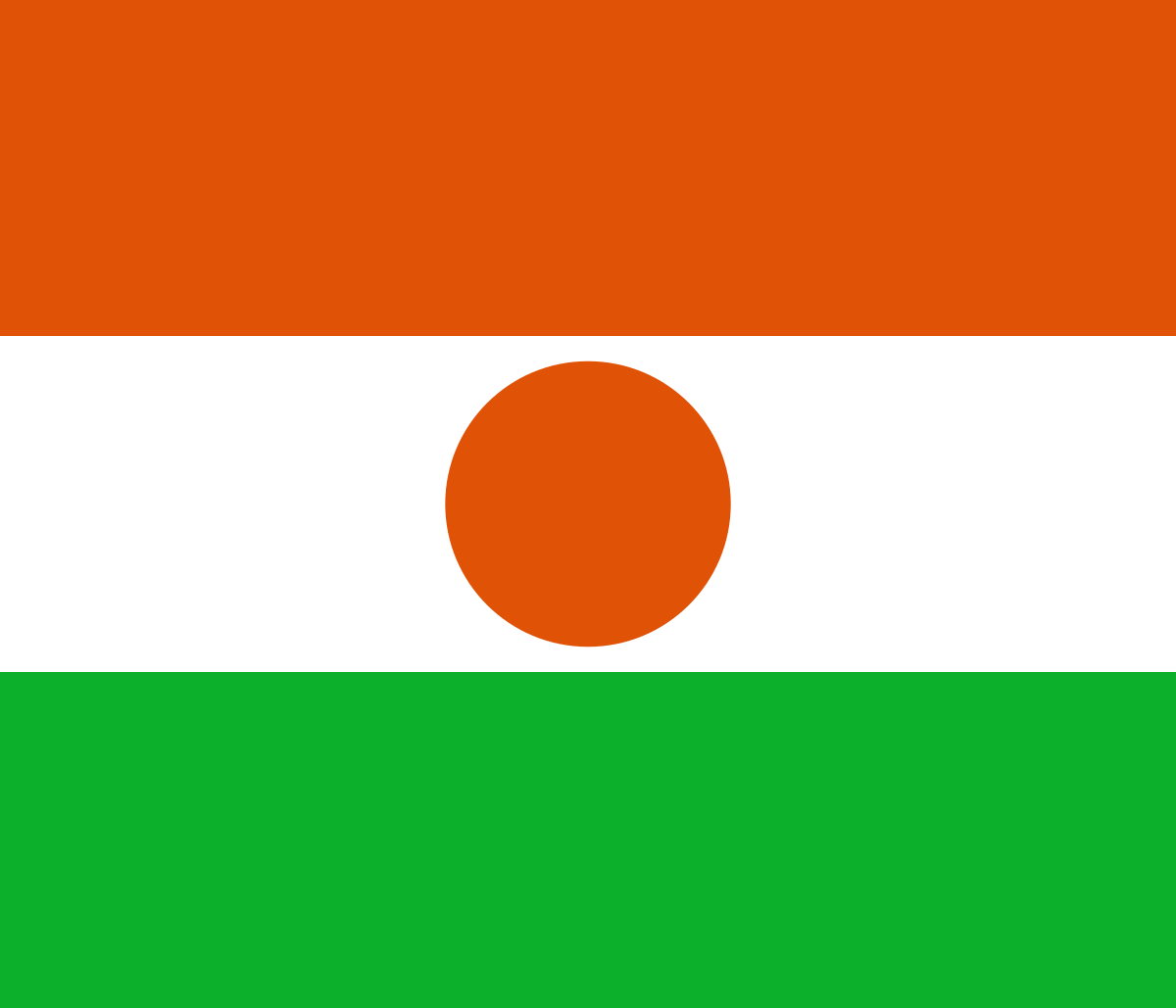
Niger’s flag shows horizontal stripes in this order: orange (top), white (middle), green (bottom) — plus a distinctive orange circle in the middle of the white stripe.
-
The orange stripe refers to the Sahara Desert or the sun/desert region; the white stripe stands for purity (or sometimes a big river); green symbolizes fertile lands and hope. The orange circle represents the sun and independence.
🇮🇳 India
-
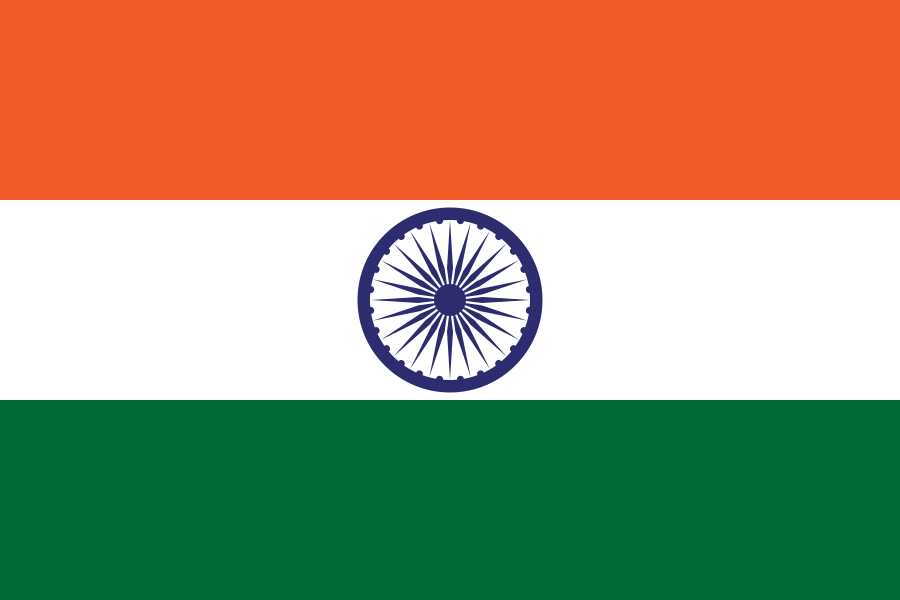
India’s national flag has horizontal stripes — top stripe is saffron (orange-ish), middle is white, bottom is green — plus a navy-blue 24-spoke wheel (Ashoka Chakra) in the centre of the white band.
-
In this flag: saffron (orange) stands for courage and sacrifice; white means peace and truth; green stands for faith, fertility, and the land; the central wheel (Ashoka Chakra) symbolizes progress, movement, and righteousness.
✅ Why So Few — And Why They Share Similar Colours
-
The combination of green, white and orange (or saffron) in national flags is relatively rare. Most countries don’t use this exact trio.
-
When countries choose these colours, it’s often to represent values like peace, unity, hope, land/vegetation, sacrifice or struggle, or historical/cultural identities.
-
Even though these flags share similar colours, each country’s flag has a distinct design (vertical vs horizontal, presence of symbol, order of colours) — and often very different meanings tied to its own culture, history, geography.

Hi, I’m Ankit Bisht. I’m an SEO and content marketing specialist with over 7 years of experience helping businesses strengthen their online presence. I focus on developing effective SEO strategies, in-depth keyword research, and data-driven content optimization to boost visibility, rankings, and traffic. I’m passionate about exploring the latest SEO trends, analyzing performance data, and implementing smart solutions that deliver measurable results.